Why people buy websites
Businesses buy websites because they want more sales, a proper home for their marketing, and a public face that a stranger will trust. Design, speed, and style are part of how that sale happens.
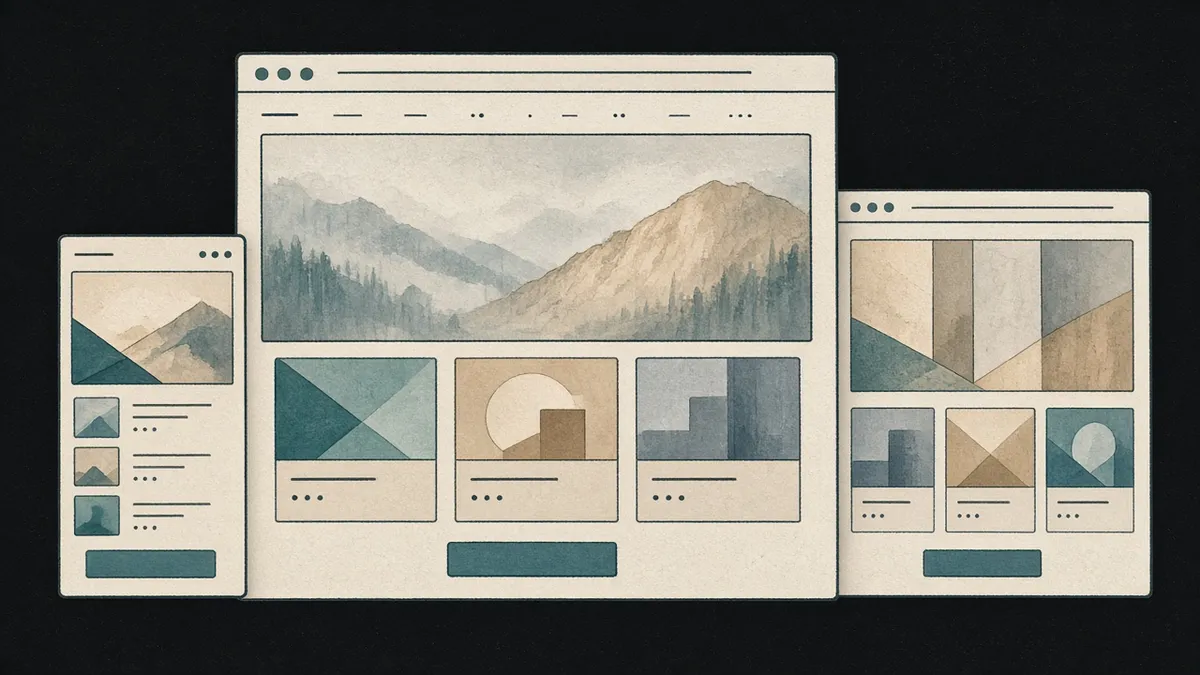
Businesses buy websites because they want more sales, and because the marketing they already pay for needs somewhere to go. A post or an advert can get someone interested. It cannot hold the price, the proof, and the button. If the page they land on is missing, slow, or looks like it was put together in an afternoon, you have paid for the attention and then given it away.
Getting the sale
When someone is ready to buy, they usually end up on a page. They searched, they clicked an advert, they opened a link from an email, or they typed the name they saw on a van. What they want at that point is ordinary: what it costs, some evidence you have done this before, and a way to book, call, enquire, or pay.
That is what the site is for. The offer has to be clear on the first screen, the proof has to be specific rather than a row of vague claims, and there should be one obvious next step. If any of that is missing, the advert can still have worked and the introduction can still have worked, and the visitor leaves because nothing asked them to continue. I have written before about owning the site rather than renting the platform. In commercial terms, you need somewhere you can send a serious buyer.
A place for the marketing to land
Ads, posts, newsletters, and a Google listing are how people find you. They are not the page that explains the offer. If every campaign has to live inside someone else’s layout, you cannot change the offer this week, you cannot point a particular advert at a page written for it, and you cannot reliably see whether people called, booked, bought, or left.
A website is where that becomes something you can repeat. The same address can sit on the van, the invoice, the pitch deck, and the advert, and you keep the layout, the archive, and the rules. Social is still worth using when you want reach. It is a poor place to keep the record of what the business actually sells.
Why design, speed, and style affect the sale
People decide whether they trust you before they get as far as the services list. They rarely ask for design, speed, or style in the first email, and they still use all three when they choose who gets the work.
A page that jumps around, with a stretched logo and six typefaces, tells them the business is improvised. A clear page suggests someone is looking after it. They will not write to you about the layout. They will either get in touch, or they will open the next result.
Speed works in the same way. If the homepage makes them wait, they have already decided the company is careless, before they have read a sentence. A page that arrives quickly, with the photograph in place and a form that submits, is simply easier to buy from.
Style is what makes them remember you well enough to mention you to someone else. A site can be accurate and still look like every other template, and those sites do not get referred. When the writing sounds like the business, and the pages do not look borrowed, the next enquiry can start without you paying for another advert.
If you leave design, speed, and style until there is money left over, you end up with a brochure that the marketing cannot use. Between two companies offering the same thing, those details are often why one of them gets the email.
What you are paying for
A useful site does not have to be a long one. It has to explain the offer, give your campaigns somewhere to land, and be something you can send to a larger client without apologising first.
Building the pages costs less than it did a few years ago. I wrote about what that does to the price of a site. It does not make the design, the speed, or the way it looks and sounds optional. Those are the parts that decide whether the marketing turns into revenue.
If you hesitate before you send someone your current link, that hesitation is already costing you sales. Get in touch if you want a site you can put in front of a buyer.