Mymlan Catamaran: Building a Website Worthy of the Charter
A custom marketing site for a 58ft Privilège luxury charter: why Instagram alone is not enough, what is on offer, and how the site showcases it.
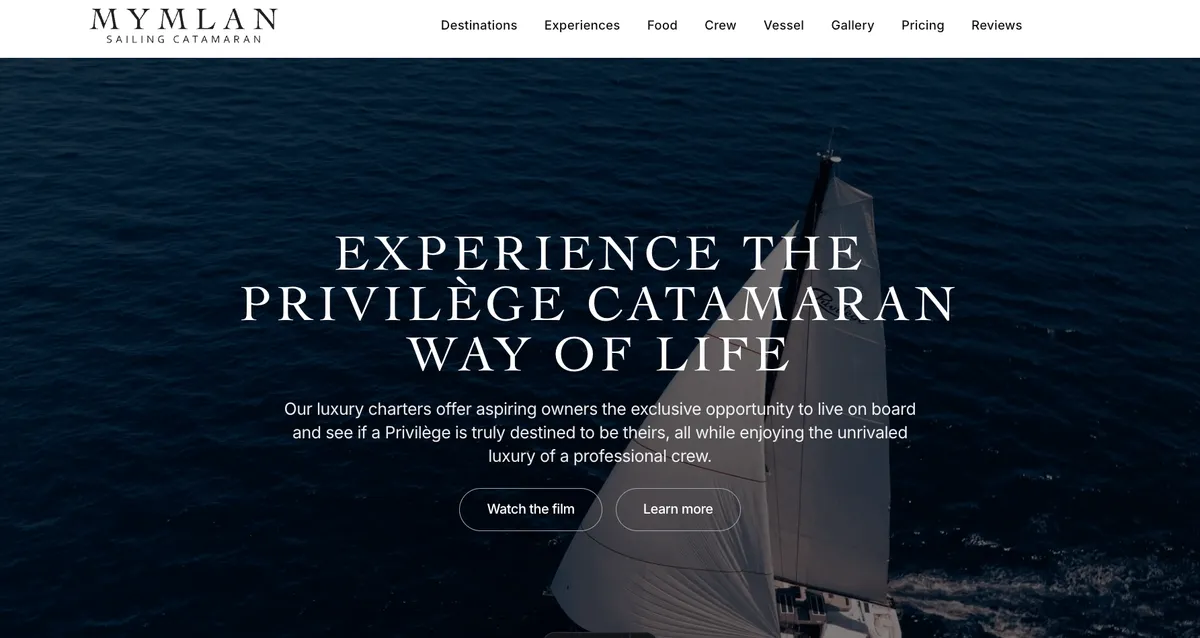
I am writing this from onboard Mymlan Catamaran, midway through a week-long holiday on a 2024 58ft Privilège sailing the Mediterranean. It is a truly premium, luxury experience: amazing food and drinks, and a crew that delivers genuine service-oriented hospitality from morning coffee to evening on the water.
I also built their marketing site. The brief was not “make a brochure.” It was to give a premium vessel a home on the web that matches how it feels when you are actually aboard.
This is that project from my side of the keyboard: why a charter like this needs its own site, what Mymlan offers guests, and how the site is designed to showcase the product.
Instagram is the lifestyle. The website is the decision.
Mymlan has a strong presence on Instagram at @mymlan_catamaran. That channel is excellent for atmosphere: sunsets on the flybridge, drone shots of the hull, the crew plating dinner, guests dropping into turquoise water. Social is where discovery and desire live.
It is not where a serious enquiry should have to do its homework.
A week aboard Mymlan starts at €32,900. That is not an impulse buy from a Reels comment. Guests and aspiring owners want specs, destinations, cabin layout, crew context, a film of the vessel, a gallery they can study, and a clear path to ask about dates. Instagram can tease all of that. It cannot hold it in a stable, searchable, shareable place you control.
I have written before about why you still need a website in 2026: platforms are rented space. For a luxury charter, that argument is sharper. You want the canonical story of the vessel on a domain you own, not buried three posts under an algorithm’s mood.
What the charter offers
Mymlan is a sailing catamaran built for comfort as much as passage-making:
- 58ft Privilège, model year 2024
- Up to 6 guests across 3 cabins: one king master and two queens
- 3 experienced crew covering navigation, hospitality, and culinary work
- Water toys and access kit: jet ski, large tender, hydraulic swim platform, scuba diving, paddleboards
Seasonally, the itinerary splits the year between two of the world’s best cruising grounds:
- Summer: Corsica, Sardinia, Sicily, Malta, and the Ionian
- Winter: St Barts, St Martin, and Anguilla
The positioning on the site goes a step beyond “book a holiday.” Charters are framed as a way to live aboard a Privilège with professional crew: useful for guests who want a pure luxury escape, and for people who are curious whether ownership of this class of catamaran is for them. That dual story needs room. A feed post cannot carry it.
On board, the design sells itself if you can see it: expansive hull windows and natural light in the cabins, a master with forward-deck access, open airflow from forward cockpit through the saloon to the aft deck, leather trim throughout, dining aft with the sea as the backdrop, a flybridge for panoramic sailing, and a foredeck with sun pads and a sunken seating area for cocktails at anchor. The saloon has a large smart TV; the master has its own sound system and a quiet desk corner. Food is treated as part of the product: locally sourced menus, chef-led dining, Mediterranean and Caribbean flavour depending on the season.
None of that is filler. For this client, the vessel is the product. The website exists to make that product legible.
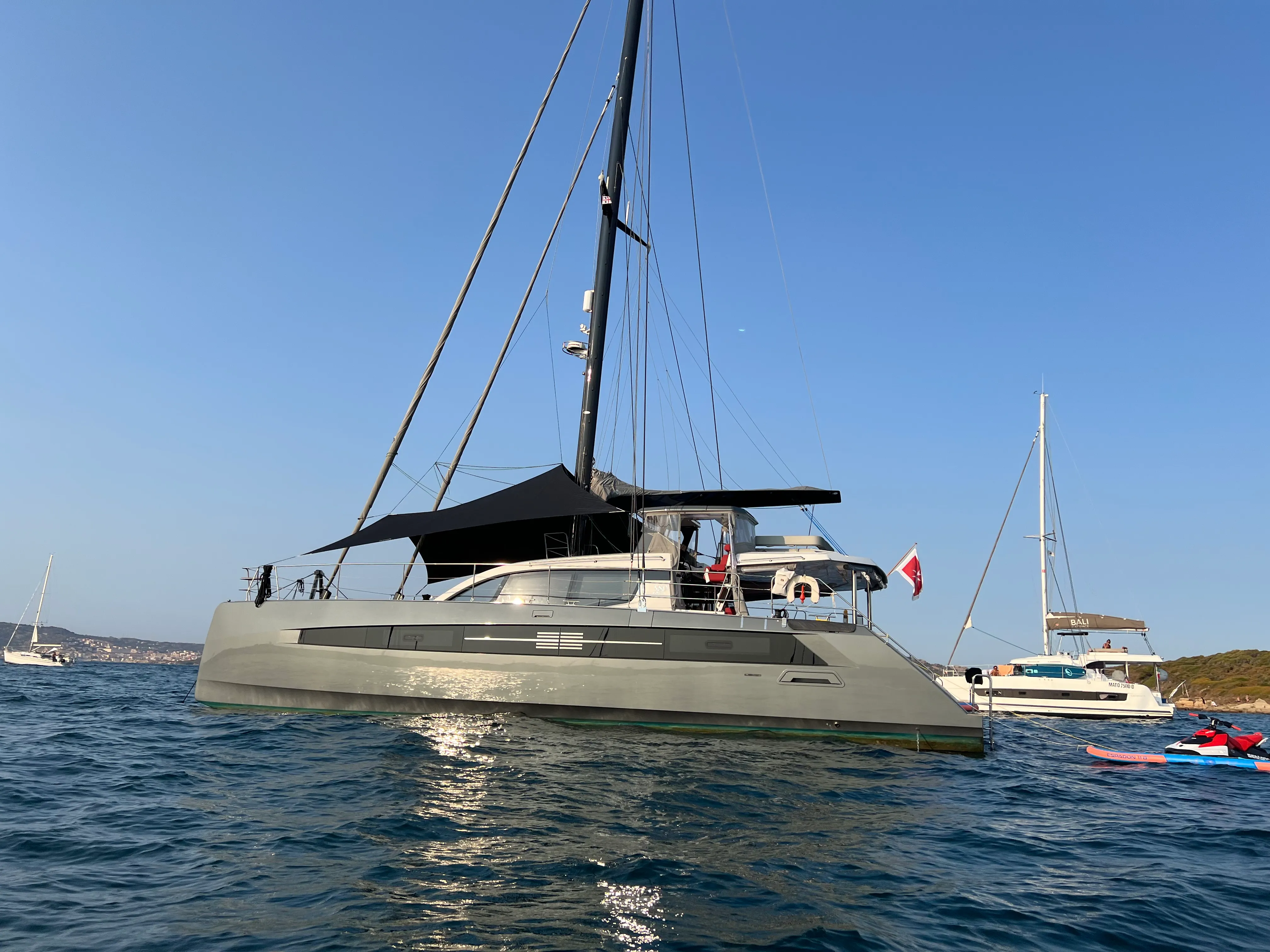
Why showcasing the vessel matters
Charter buyers are buying confidence. They are trusting a crew they have not met, a vessel they have not walked, and a week they cannot easily undo. Photography, a video tour, cabin detail, crew pages, and a food showcase are not decoration. They are the proof stack.
On Instagram, those assets compete with every other account in the feed. On the site, they are sequenced on purpose: hero and film first, then the offer and pricing frame, then highlights, then deeper proof (crew, food, gallery), then a booking path with a clear response expectation. The visitor’s attention is directed, not rented by the hour.
That is especially important on mobile. A huge share of early research happens on a phone, often after seeing a photo or reel. If the site is slow, cluttered, or vague about what guests are actually booking, the moment dies. A static, performance-minded build is not a technical vanity choice here. It is part of selling a premium experience before patience runs out.
What I built
The live site is a campaign-style marketing experience: section-led pages rather than a bloated CMS theme. Stack-wise it is Astro, Tailwind, and custom video, with media loading treated carefully so imagery and film do not punish first paint.
The shape of the homepage mirrors how a good charter pitch works in person:
- Make the vessel feel immediate (hero, film, atmosphere)
- State the offer clearly (size, guests, cabins, price band, seasons)
- Prove the lifestyle (highlights, interiors, water access)
- Introduce the people and the food
- Open the gallery and the enquiry path
Inner routes deepen the story (vessel detail, gallery collections, crew, menus) without forcing every visitor through the same wall of content. You can point paid campaigns, partner links, and Instagram bios at a single URL that still works when the latest post ages out of the feed.
You can see the project listed with other independent work on websites, and a shorter write-up of the landing-page pattern on landing pages.
Built with the crew
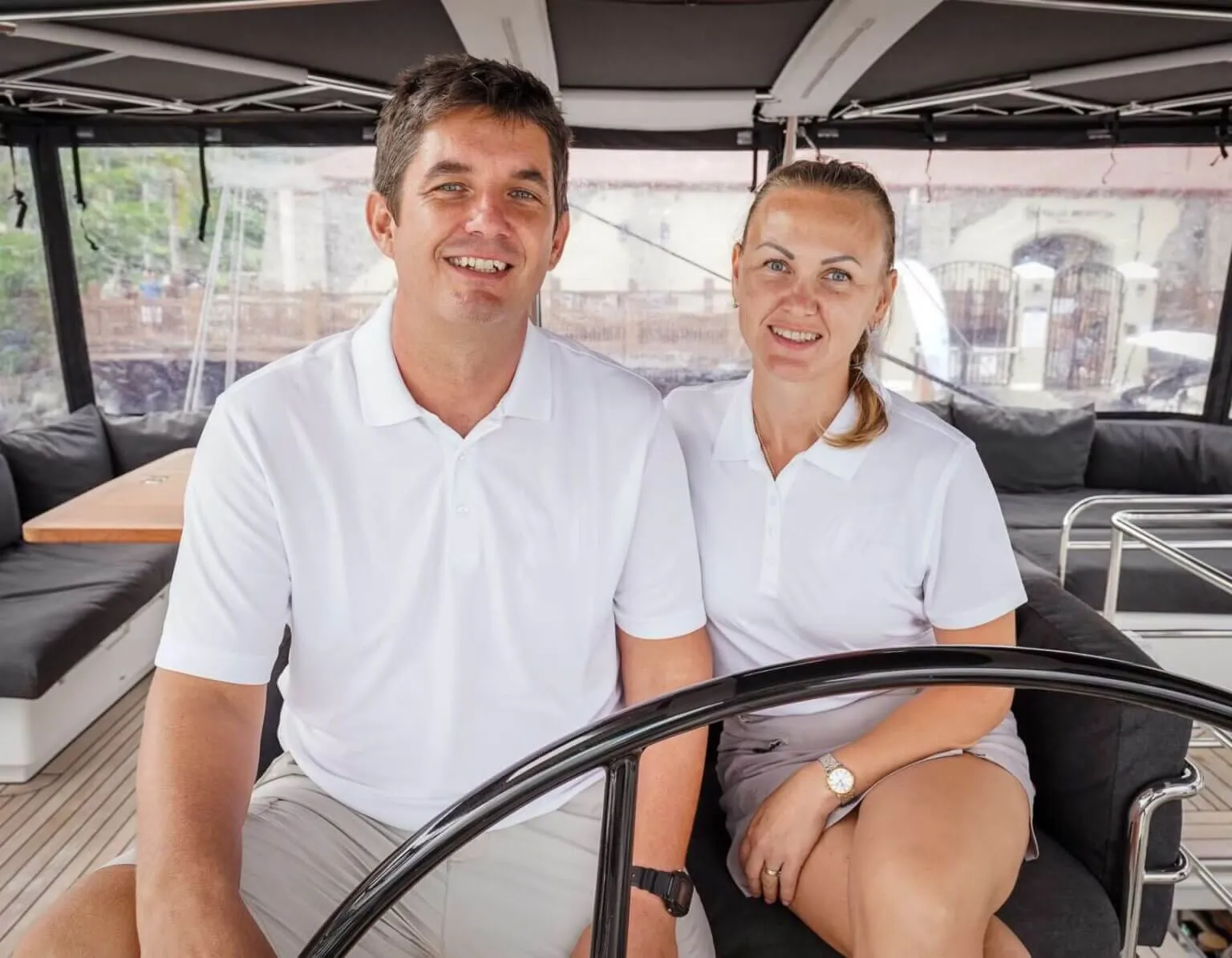
The site was not designed in a vacuum. I worked with the crew on what they needed from the web presence and how they wanted to show off the vessel: which spaces matter most to guests, how the film and gallery should feel, what to say about itineraries and life on board, and where an enquiry should lead. They live the product every day. Their priorities shaped the structure and the tone, so the finished site matches how they actually sell a week aboard, not a generic charter template.
Shipped from the boat
One detail I still enjoy: I published the site from aboard Mymlan. The vessel has serious connectivity for life at sea, fast enough that a normal Git push and deploy felt like working from a café, not from a floating office fighting packet loss. Being able to review the build in context (water, light, the real catamaran in the background) and push live without waiting for a marina connection is a small thing that says a lot about how modern this setup is.
For a charter product aimed at guests who expect everything to just work, that kind of detail fits the brand. The site went live from the product it sells.
See it live
If you are researching a Mediterranean or Caribbean charter week, start with the vessel itself: mymlancatamaran.com. For day-to-day life aboard and seasonal updates, follow @mymlan_catamaran on Instagram.
If you run a premium offer (charter, hospitality, property, product) and need a site that showcases the thing you are actually selling rather than a generic template, get in touch. Happy to talk through scope.