AI Content, Dead Internet Theory, and Tears in Rain
Dead Internet Theory treats AI text as the end of the real web. Human fakery got there first. What matters is not whether a model typed it, but whether anyone still means anything by it.
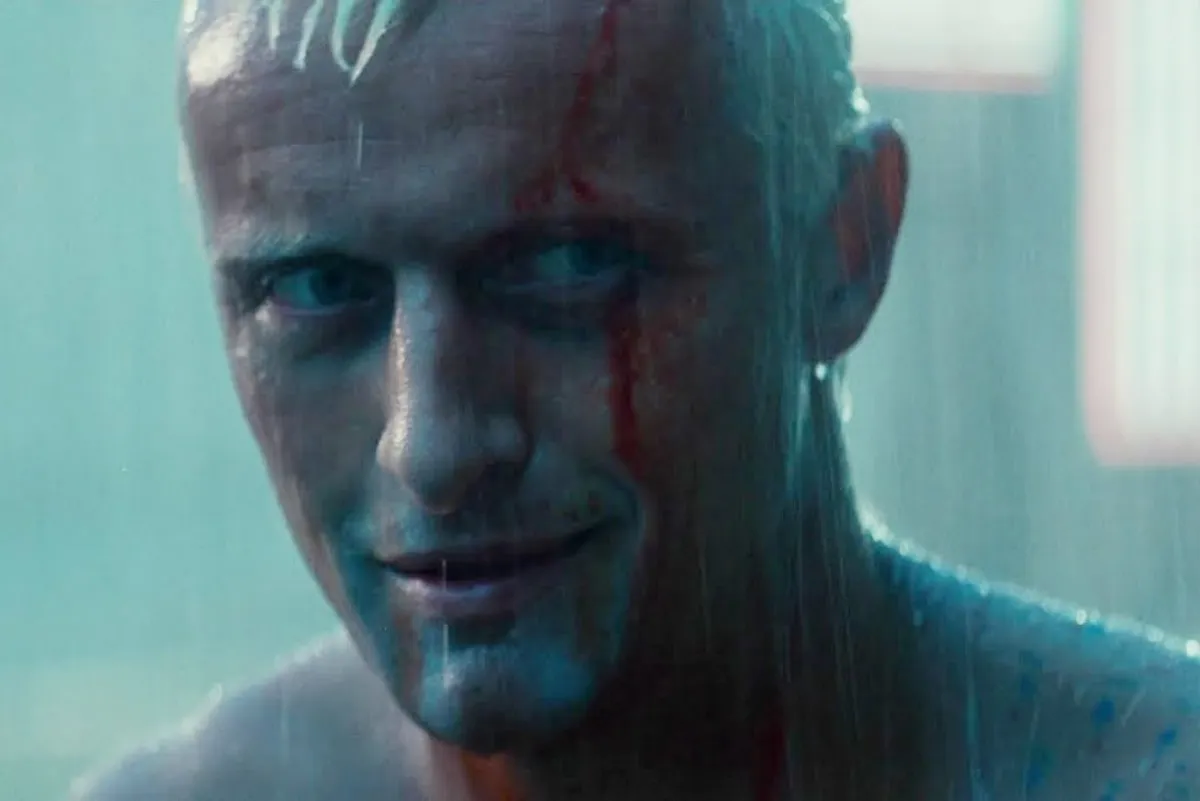
In Blade Runner, Roy Batty does not beg to be treated as human. He lists what he has witnessed, then accepts that it will vanish:
I’ve seen things you people wouldn’t believe. Attack ships on fire off the shoulder of Orion. I watched C-beams glitter in the dark near the Tannhäuser Gate. All those moments will be lost in time, like tears in rain.
That line is usually quoted as poetry about death. It is also a useful way to think about the modern web. Experiences, posts, and “authentic” voices appear, circulate, and dissolve. Most of them leave no durable mark. The anxiety of 2026 is that machines are filling that rain with synthetic droplets. The older truth is that people have been seeding the storm for years.
Dead Internet Theory, briefly
Dead Internet Theory is the claim that large parts of the public web are no longer primarily human conversation. Bots, engagement farms, recycled media, and now generative models produce so much surface activity that “real” people are swimming in a simulation of a crowd.
Like most internet folk theories, it mixes a sharp observation with a melodramatic conclusion. Yes: a huge share of online content is automated, templated, scraped, or written for algorithms rather than readers. No: that does not mean the internet “died” on a Tuesday and was replaced by a single puppet show. What died, if anything, was the romantic idea that posting online was mostly sincere people talking to other sincere people.
AI did not invent the hollow feed. It industrialised it.
The panic about AI writing
The current fear is specific: if a language model can produce a blog post, a product page, a comment, or a thought-leader thread, then authorship collapses and trust collapses with it.
That fear is understandable. Scale matters. A person can fake one life. A model can fake a thousand voices before lunch. Search results fill with interchangeable explainers. Social platforms fill with plausible opinions that nobody held. Brands ship copy that sounds like a brand because it was trained on brands sounding like brands.
But notice what the complaint usually protects: a purity standard for origin. Was this typed by a human hand? If yes, it is somehow more legitimate. If no, it is spam, theft, or cultural decay.
Origin is the wrong test.
Humans were already performing
Long before ChatGPT, the web was full of people assuming roles.
Marketing teams write in a house voice that no single employee would use at dinner. Founders publish “personal” posts drafted by agencies. Influencers stage mornings, apartments, relationships, and productivity rituals as product. Ghostwriters have always existed in politics, business, and celebrity memoir. Customer reviews get incentivised. LinkedIn fills with career theatre. Dating profiles and Instagram feeds are curated fiction with filters. Comment sections are brigaded. “Community managers” reply as the brand. Entire identities online are costumes worn for status, sales, or safety.
None of that required a transformer model. It required incentives.
If your standard for real content is “a private individual, alone, expressing an unperformed inner life,” then most of the commercial internet has always failed that standard. AI did not introduce fakery into publishing. It removed some of the labour cost of fakery that humans were already happy to do.
That is the uncomfortable continuity. An AI writing “as” a founder is not categorically different from a founder hiring someone to write “as” them, or from that founder performing founder-ness themselves because the platform rewards the costume. The medium has been roleplay for a long time. The cast list just got cheaper.
More human than human
In Blade Runner, the Tyrell Corporation’s motto is “More human than human.” That is the sales line for replicants, and it fits a lot of AI-generated content too.
Some model output is not the flat spam people expect. It is smoother, clearer, and more on-brand than what a tired human would write at midnight. Landing pages that convert. FAQs that answer the damn question. Product copy that stays on message. For those jobs, the synthetic version can work better than the clumsy human draft, for as long as it is believed.
Belief is the product. The moment a reader smells the costume, or a claim falls apart under scrutiny, the advantage dies. Until then, “more human than human” is not a paradox. It is a market outcome.
Synthetic is not the same as empty
There is still a distinction worth keeping, and it is not human versus model.
Empty content is content with no accountable intent behind it: no point of view worth defending, no product knowledge, no lived constraint, no willingness to be wrong in public, no owner who will stand by the claim next month. Plenty of human content is empty. Plenty of AI-assisted content is not, when a person with judgment uses the model as a drafting instrument and then edits for truth, taste, and specificity.
I use AI in my own work, including on sites and posts. The useful question is never “did a model touch this?” It is “does someone responsible mean this, and can a reader tell?”
That is closer to how we already judge film, advertising, speechwriting, and design. We do not demand that every frame was painted by one unbroken human soul. We ask whether the result has coherence, craft, and a reason to exist beyond gaming a feed.
Tears in the rain
Batty’s speech lands because the moments were real to him, even if he was artificial, and because they still wash away. The tragedy is not that a machine had experiences. The tragedy is impermanence.
Online, almost everything is tears in rain: the hot take, the polished brand story, the staged holiday, the AI summary of an AI summary. They glitter for a moment in the dark, then disappear into the next scroll. Obsessing over whether the droplet was squeezed from a human duct or a sampling distribution misses the harder problem.
If everything dissolves, what do you choose to make durable?
For people who build websites and publish for a living, the answer is still boring and still right:
- Say things you can stand behind
- Prefer specificity over generic authority
- Keep a home for your words that you own, not only rented platforms
- Use AI as leverage, not as a substitute for having a point
- Accept that performance is part of public speech, then refuse the worst kinds of deceit
Dead Internet Theory is useful as a weather report. It is weak as a moral panic. The web was already thick with assumed roles, staged lives, and writing done in someone else’s name. AI accelerates that. It does not create a new metaphysical category of falsehood.
Most of what we post will still be lost in time. The work, human or machine-assisted, is to make a few moments worth remembering before the rain takes them.